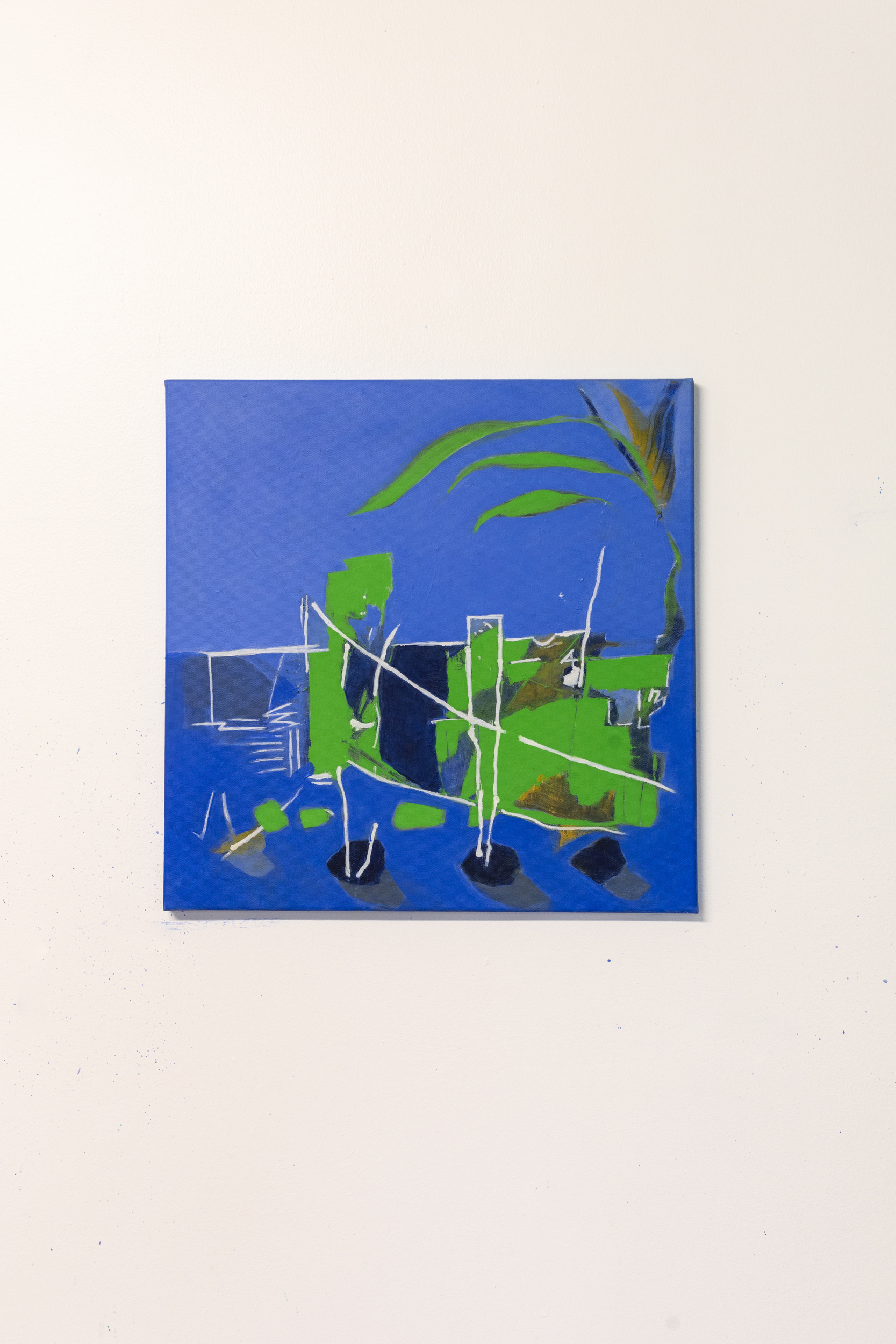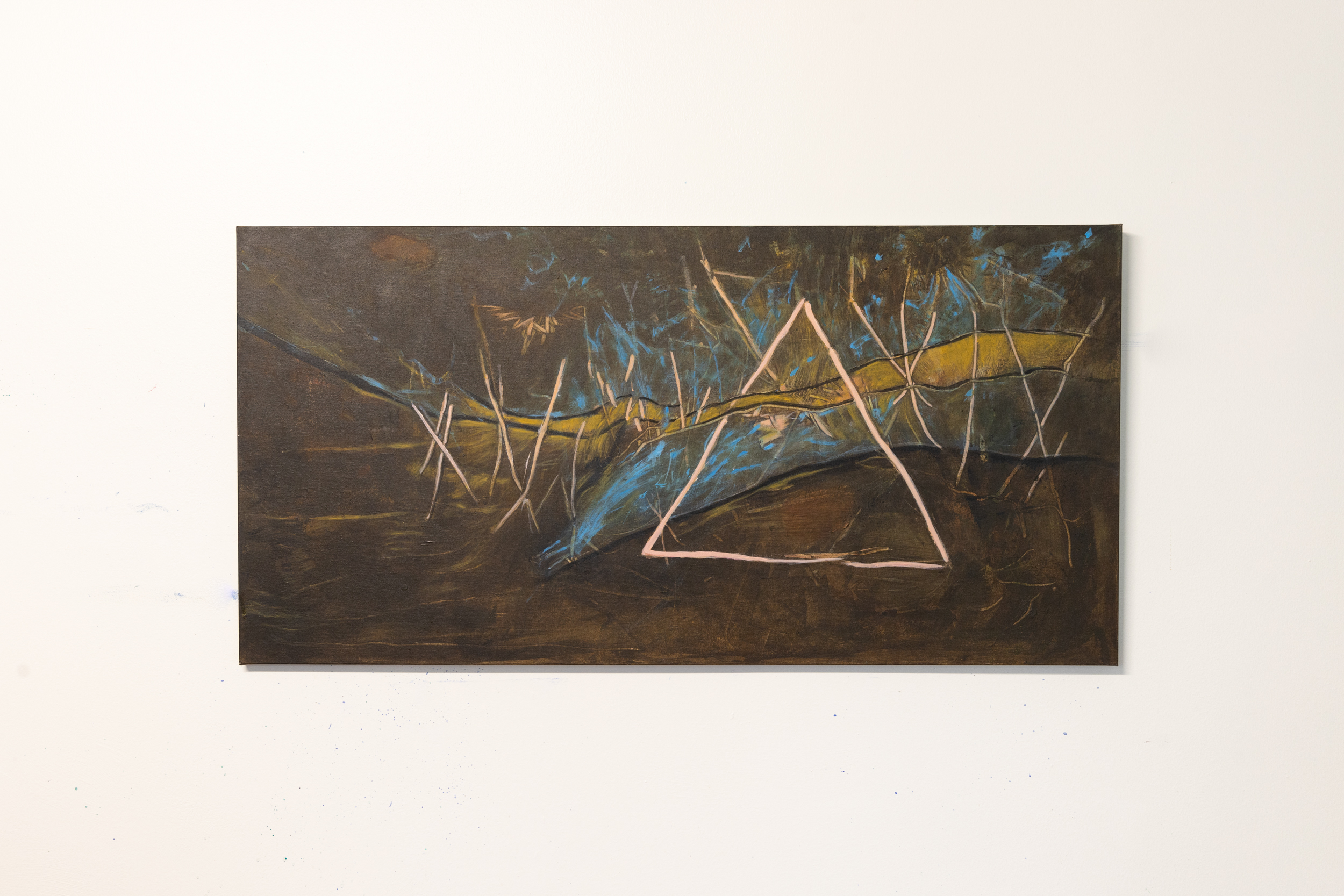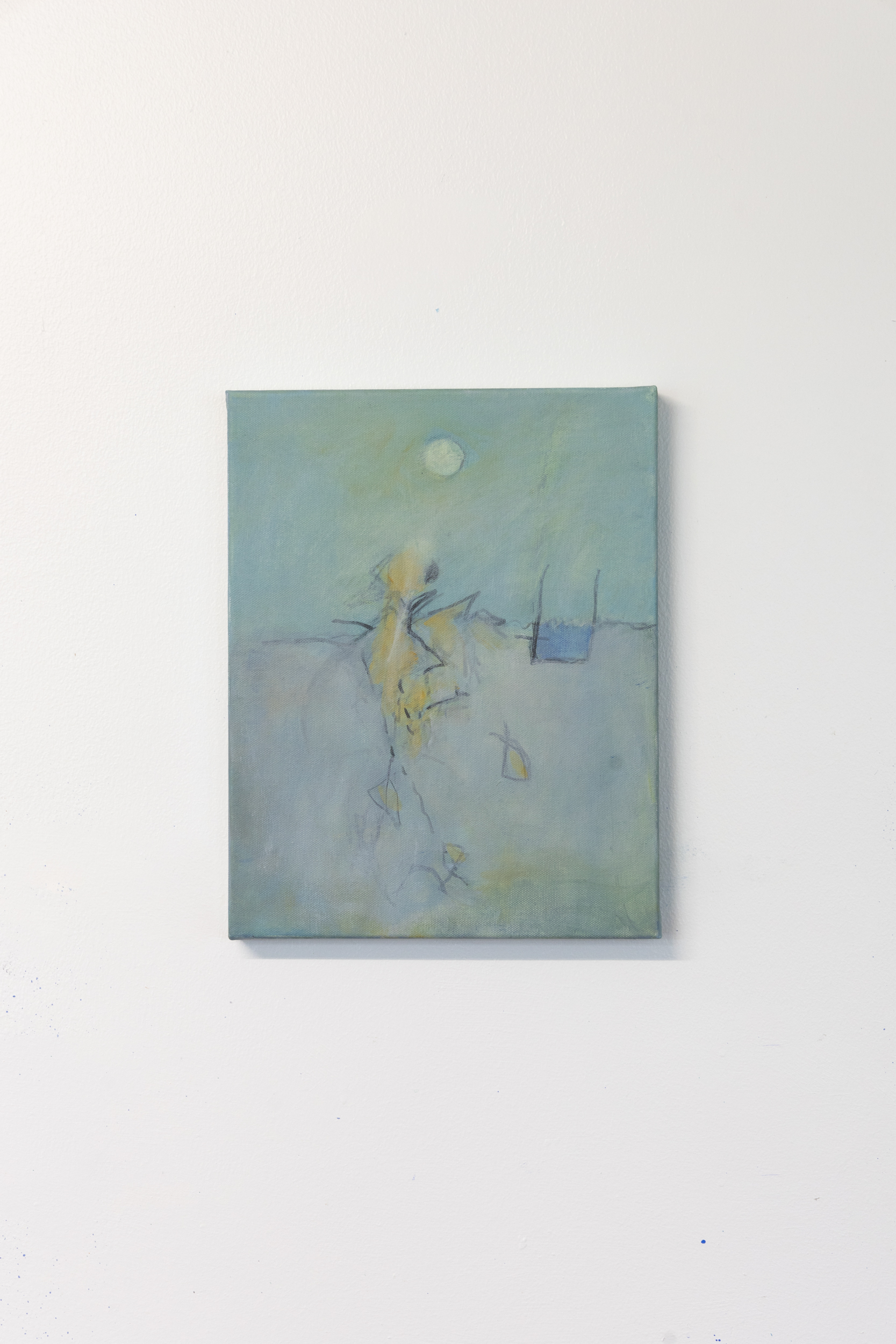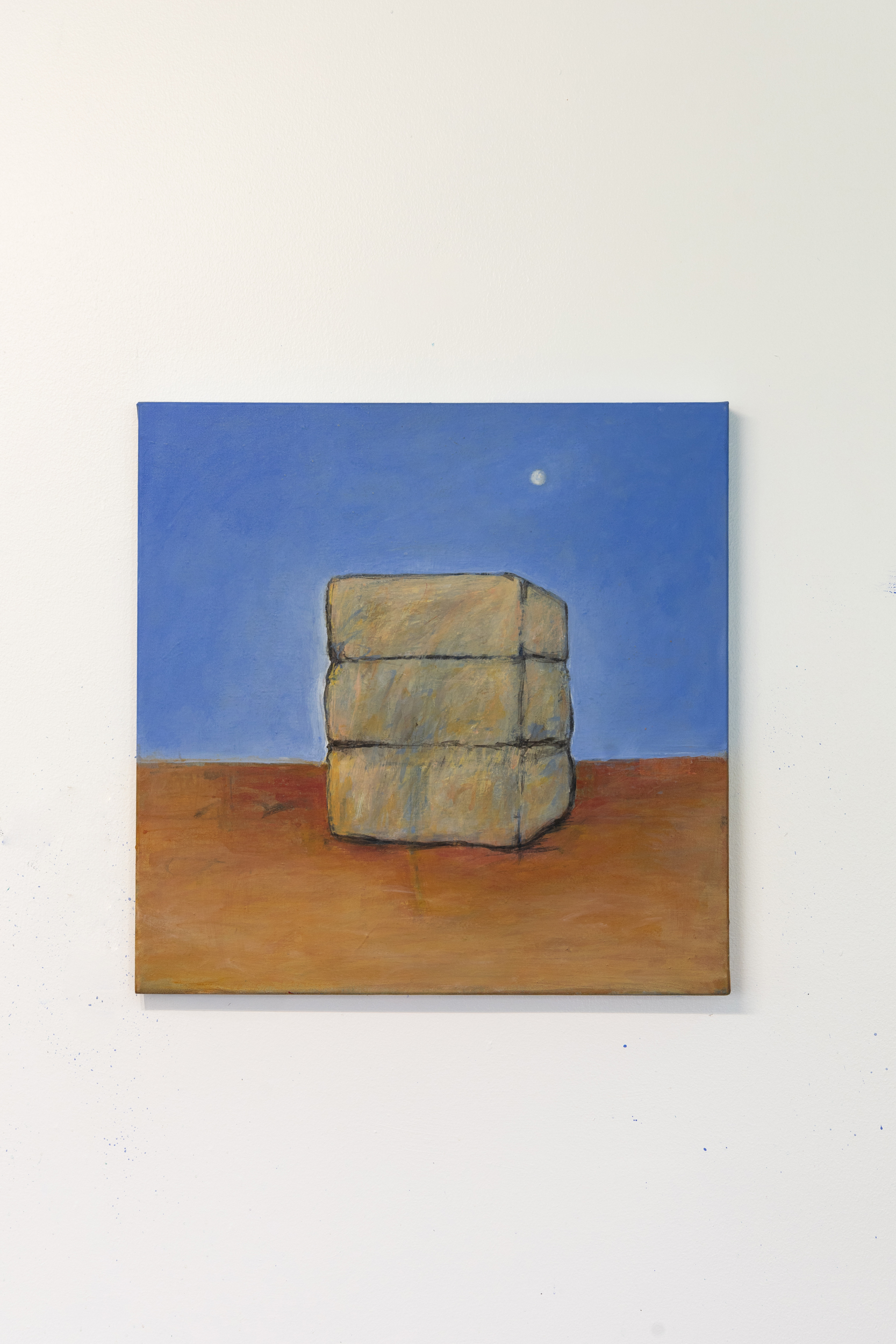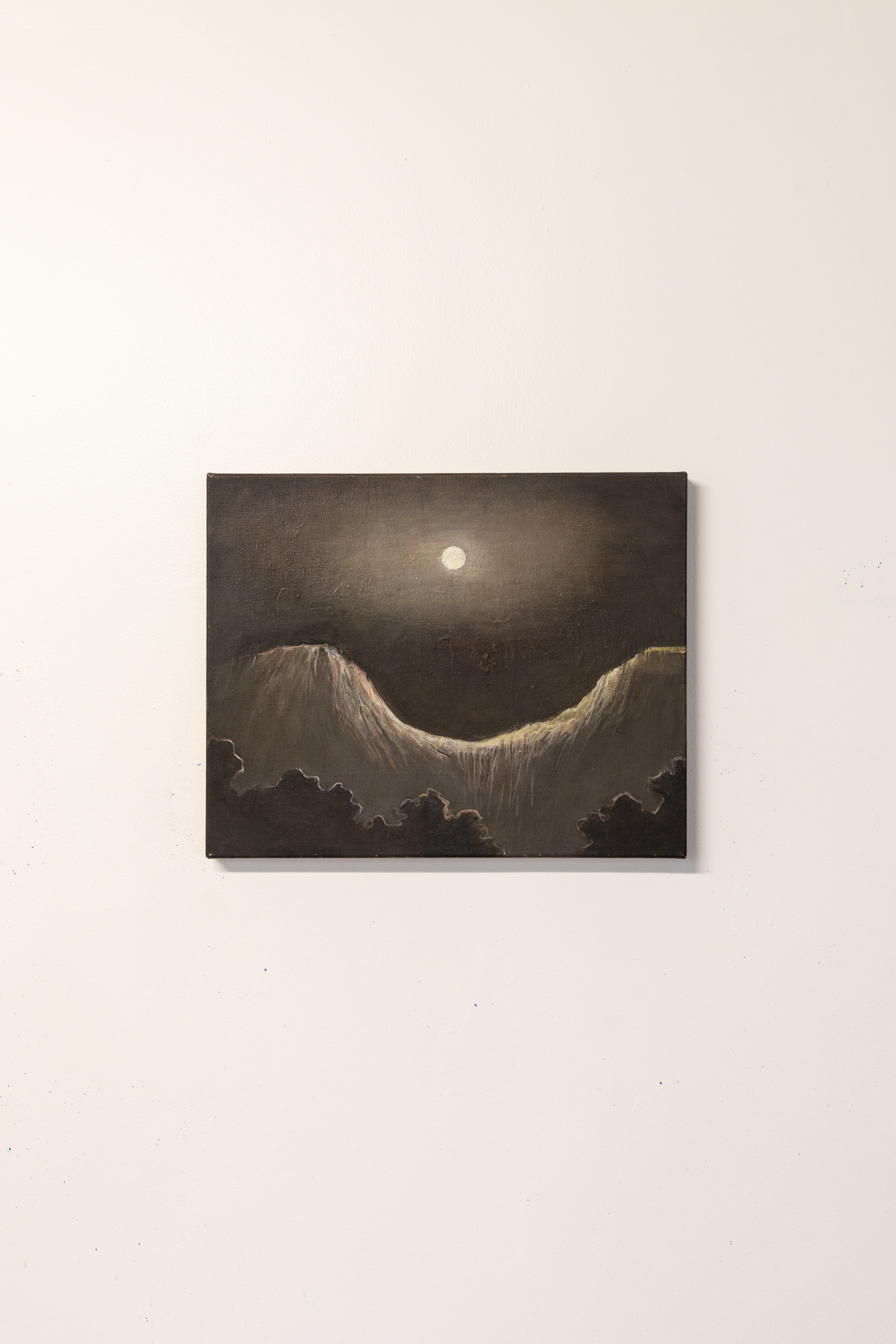
If I had to choose a way of living, I would choose to live like Paquita: attentive to the fragile pulse of the earth, keeping the memory of worn-down mountains, and discovering the beauty hidden in the gray tones of a deteriorating landscape. Her way of inhabiting the world is not a retreat, but a silent resistance, like the steady gait of La Parce, the once stray dog who has shared her home for years. Paquita lives as she works: from an ethic of responsibility toward nature and toward a future in which life itself rises to defend against human collapse.
From the countryside to the city
For fifteen years, Paquita developed an ecofeminist project in the Los Santos region. On every journey from San José to the finca she witnessed landscapes degraded by agricultural industrialization and unchecked urban growth. Part of this observation was translated into paintings that are now part of the Central Bank Museums’ collection and were exhibited in Reimaginar la frontera (2021). In her previous show, Luna de Agua, Luna de Fuego (2025), presented at the Museo Regional de San Ramón, Cruz evoked droughts, ecological imbalance, and the fragility of the environment—not from a distant judgment, but from the sensitive experience of one who inhabits and observes those territories.
Her painting embodies an ethic of care and interdependence. It reminds us that the task is not to “save the planet,” but to save ourselves; life will go on, even amid floods and disasters, as nature’s response to an abusive system. Art thus becomes both testimony and call: to recognize the beauty that endures in life’s act of self-defense. As Cruz herself says, “life is beautiful when it defends itself,” even if that defense sweeps us along with it.
The natural order of things
After concluding her project in the finca, Paquita settled permanently in her home in Barrio Escalante. There she lives with La Parce, her studio, and her patio—more a wild garden, a vegetable patch, a tangle of shrubs that summons butterflies, hummingbirds, and birds that feed on the same fruits and vegetables she eats. In her home, time flows at a different pace. Were it not for the concrete towers looming on the horizon, one could imagine being somewhere else.
The towers rise around her: Urban and other developments multiplying. Near the old Pulpería La Luz now stands Secret. With her camera, Paquita insists on the same photo: with or without the moon, always the same image of the towers. Nothing changes, except for what post-production leaves behind: the crop, the distortion.
Paquita foresees the future: uninhabited cities, transient investments for Airbnb, tax reductions. A San José stripped of inhabitants, with iron shutters on its windows, empty buildings, a ghost town.
From ecofeminism emerges the question: how can we organize the city differently? Environmental imbalance lies in the very way we build. The “blue flag” of ecological certification barely masks the contradiction: the only green comes from potted plants; there are no planted rooftops, no living terraces. The towers could be transformed into genuine housing—accessible to the real economy of those who inhabit the city—with ecological awareness, rooftop gardens, terraces turned into orchards. By contrast, a tropical utopia grants these constructions a kind of identity: the palm tree, the aesthetic of the piña colada, as Paquita wryly observes.
Extractivist planning squeezes every square meter of land, encircles parks with buildings, and turns urban life into an arid landscape. Municipal permits are granted without order, indiscriminately. San José’s original downtown was never repopulated; it remains as empty as ever.
Ecofeminism and landscape
Paquita Cruz’s work is nourished by an ecofeminist perspective that acknowledges the intimate relationship between women, nature, and critique of the extractivist model (Shiva, 1995). This perspective resonates with Françoise d’Eaubonne (1974), a founding voice of ecofeminism, who pointed to the intersection between gender oppression and environmental destruction. Her proposal also connects with Val Plumwood’s (1993) critique of Western dualist thought that has subordinated both the female body and the natural world. Against this patriarchal and capitalist model, Cruz offers an aesthetics of deterioration that refuses to abandon either critique or hope: a landscape that is wound and resistance at the same time. As Rancière (2020) suggests, her work displaces the aesthetic regime of landscape from contemplation to evocation: it is not merely a matter of looking, but of moving through the fracture, of rendering the fissure visible.
Text by Cristina Ramírez León.
References:
d’Eaubonne, F. (1974). El feminismo o la muerte. Ediciones Pierre Horay. Recuperado de: https://www.solidaridadobrera.org/ateneo_nacho/libros/Fran%C3%A7oise%20d%C2%B4Eaubonne%20-%20El%20feminismo%20o%20la%20muerte.pdf?utm_source=chatgpt.com
Rancière, J. (2020). El tiempo del paisaje: Sobre el origen de la estética. Ediciones Cactus.
Shiva, V. (1995). Abrazar la vida. Mujer, ecología y desarrollo. Horas y Horas.